Choosing the right sedation for a long dental procedure
A four-hour implant placement, a full-mouth veneer session or a same-day bone graft can keep you in the chair from breakfast until evening. Whether you are comfortable staying awake that long depends less on your pain tolerance than on the type of procedure, your history with dental visits, and how you plan to get home afterwards. Every level of sedation trades off consciousness, control and recovery time, and for patients flying out of Australia after treatment, that trade-off has consequences most booking emails never explain.
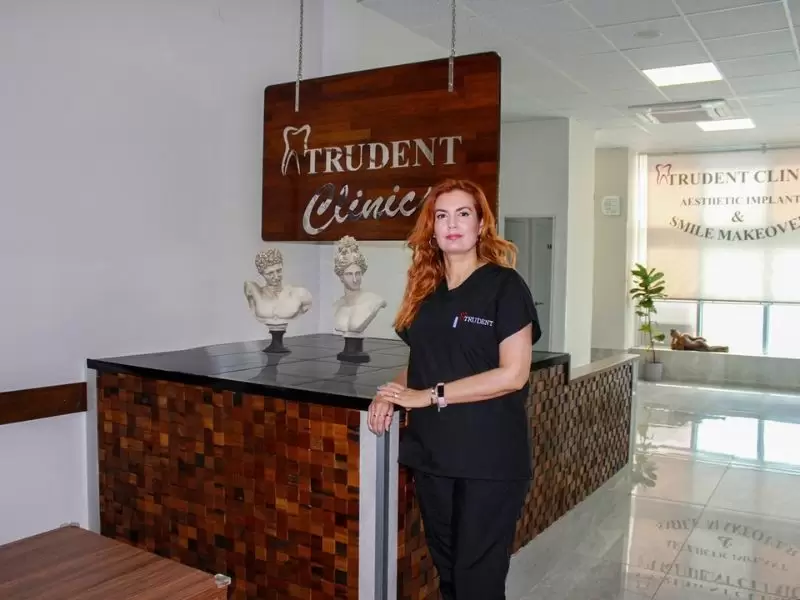
At TruDent Clinics in Izmir, sedation is decided as part of a personalised treatment plan rather than a standard package. The team weighs the expected length of the appointment, your medical history and your tolerance of the dental chair, then matches the lightest effective option to the work ahead. That conversation matters even more for Australian patients arriving from Melbourne, Sydney, Brisbane and Perth with return flights booked days after surgery, and who need a recovery strategy that actually fits the flight home.
Why sedation level matters when treatment runs long
The main reason to choose more than local anaesthetic is not pain, it is stamina and focus. Numbing keeps you comfortable but not still. Over three hours or more, patients commonly report jaw ache from holding the mouth open, restlessness under a rubber dam, and raised blood pressure from hours of adrenaline. A nervous patient who must stay silent and motionless may also move at the wrong moment, which slows the surgeon and makes the result less predictable. Sedation addresses both the physical strain and the anxiety that comes with it.
The second reason is that sedation changes your memory of the appointment and the shape of your recovery. Under minimal sedation you chat with the dentist throughout and you are up and walking shortly afterwards. Under general anaesthesia you wake with no recollection of the procedure, but you need hours of monitored recovery and a quiet day afterwards. For Australians on an overseas treatment trip, the level you choose sets the itinerary: a hotel night near the clinic, a companion on the flight, or a flight booked a full day later than you originally planned.
There is also a terminology point worth sorting out early. In Australia, "twilight sedation" generally means intravenous sedation, where you are relaxed and drowsy but still breathing for yourself while an anaesthetist supervises, and "laughing gas" refers to nitrous oxide. Turkish clinics describe the same ideas as sedasyon for IV sedation and genel anestezi for a full general anaesthetic, often delivered in a day-surgery setting for full-arch work. Ask for the exact drugs used, the credentials of the person monitoring you, and who takes responsibility for your airway.
Local anaesthetic, laughing gas and the mildest options
Local anaesthetic remains the backbone of most dental treatment, and for a long appointment the technique matters as much as the drug. Clinicians often use an adrenaline-free anaesthetic to limit bleeding and reduce the pounding heartbeat some patients notice, and they build in a short break so you can stretch, drink water and adjust the chair. If your treatment involves a single quadrant, a couple of fillings and a clean, local anaesthetic alone may be entirely adequate. It wears off within a few hours, you eat and drink normally, you drive yourself home, and you can fly the same day.
Nitrous oxide is the next rung up: a mask over your nose delivering a mix of nitrous oxide and oxygen. It is minimal sedation, so you stay awake, you can respond to instructions, and the effect clears within minutes of the mask coming off. Australian patients tend to like it because no recovery companion is required and there is no grogginess afterwards, which suits a straightforward appointment before a flight out of Sydney or a routine visit at home in Adelaide. Its limitation is endurance rather than safety. Gas is generally used for shorter procedures or as an adjunct, and most surgeons will not attempt a five-hour full-arch implant placement under nitrous alone, because they want you settled and still for the entire session.
Oral and IV sedation for moderate to deep treatment
Oral sedation, commonly midazolam and sometimes paired with an antihistamine, is taken as a tablet roughly 30 to 60 minutes before the appointment. It is inexpensive, needs no anaesthetist to administer the drug itself, and is a reasonable choice for a moderately anxious patient facing a two-hour appointment. Its weakness is unpredictability: some people become drowsy but not calm, others are more affected than they expected, and once the tablet is swallowed the dental team cannot titrate the effect.
Intravenous sedation solves that problem, because the dose is delivered through a line in your arm and adjusted minute by minute. Under IV sedation with propofol, an anaesthetist or sedation nurse remains with you throughout, you keep breathing for yourself, you usually recall little of the appointment, and recovery involves one to two hours of observation before discharge to a responsible adult with written instructions. This option is widely available in Izmir for implants, veneers and surgical extractions, and it is the standard choice for patients who want to be comfortable yet aware enough to cooperate with a long procedure.
For travellers from Australia, the practical difference between oral and IV sedation usually comes down to the airport. Oral sedation with local anaesthetic often allows a flight the next morning; IV sedation usually means a hotel night, a later flight and someone travelling alongside you. Many people therefore extend a weekend trip to a week, so that the recovery days are spent somewhere quiet rather than squeezed between connections.
General anaesthesia for the most extensive work
General anaesthesia is the most complete option available: you are fully anaesthetised and unaware, with an anaesthetist managing your airway and vital signs throughout. Turkish clinics routinely use it for full-arch cases such as all-on-four and all-on-six, for extensive bone grafting, and for patients with severe dental phobia, a strong gag reflex, or medical conditions such as poorly controlled diabetes or a bleeding disorder that make hours of treatment in an awake chair risky. Day surgery with a short observation period is common, and the surgeon gains both time and precision.
The cost is the recovery curve. Expect grogginess through the following 12 to 24 hours, a sore throat from the breathing tube, and restrictions on eating, drinking and exercise for the first day. Alcohol is off the menu for at least a day, and any sedatives, painkillers or sleeping tablets you take need to be disclosed beforehand. You will also need to tell your companion what to watch for, because nobody remembers much of the first few hours after emerging.
Then there is the flight home. Many airlines ask for a medical clearance letter after a general anaesthetic, and Australian travel agents arranging overseas dental work generally will not let you book a departure within 24 hours, with 48 to 72 hours the safer advice. A long-haul flight while still groggy is miserable, and if you are prescribed an opioid such as oxycodone afterwards, Australian Border Force expects every medicine to be declared and kept in its original packaging with a prescription or doctor's letter. Sort that paperwork before you travel, not at the check-in desk.
The factors that should guide your decision
The right answer is the lightest option that allows the procedure to be completed properly and lets you travel home safely. A few inputs push a patient further up the ladder: realistic chair time, previous traumatic experiences in the dental chair, significant medical conditions, whether the clinic has an anaesthetist on site or relies on a visiting one, and whether you are travelling alone or with a companion. Patients who are otherwise fit but nervous usually need less sedation than they expect, and patients with a difficult medical picture sometimes need more.
Cost plays a role too. In Australia, Medicare does not cover adult cosmetic or restorative dental treatment, and private health extras policies often exclude implants and orthodontics entirely, which is a large part of why people quote prices in Istanbul, Izmir or Budapest in the first place. The Australian Dental Association has also cautioned that some overseas operators advertise aggressively in Melbourne and Brisbane without the same aftercare continuity available at home, so the availability of sedation and the presence of a properly qualified anaesthetist are worth comparing alongside the headline price.
A practical order of thinking works well here: establish the realistic length of the appointment first, then decide how much of it you want to remember, then check the recovery requirements against your flight schedule, and finally confirm who will be with you for the first night.
Comparing the main options side by side
Here is how the usual options stack up against the factors that matter most for a long procedure and an overseas trip.
| Option |
Typical use |
What you experience |
Recovery |
Fit for travelling Australians |
| Local anaesthetic |
Short to moderate appointments, single quadrant work |
Fully awake, numb, able to talk and signal discomfort |
Wears off in a few hours |
Easiest to combine with travel; fly the same day |
| Nitrous oxide |
Short procedures, mild to moderate anxiety, adjunct use |
Awake and responsive, relaxed, no memory issues |
Clears within minutes |
No companion needed; good before a same-day flight |
| Oral sedation |
Up to about two hours, moderate anxiety |
Drowsy, calm, effects vary between patients |
Several hours, no driving |
Often fine with a next-morning departure |
| IV sedation |
Two to six hours, implants, veneers, surgical work |
Drowsy but breathing independently, little recall |
One to two hours observed, needs a companion |
Plan a hotel night and a later flight |
| General anaesthesia |
Full-arch implants, grafting, severe phobia or medical risk |
Fully unconscious, airway managed by an anaesthetist |
12 to 24 hours groggy, 24 to 48 hours before flying |
Requires a clearance letter, an escort and careful scheduling |
Planning the days around your procedure
Two short checklists cover most of what Australian patients wish they had arranged before landing in Izmir.
Before you leave Australia
- Book the return flight with at least 24 hours, ideally 48, between the procedure and departure, and add a rest night near the clinic.
- Arrange a companion who can stay with you overnight and travel with you if IV sedation or general anaesthesia is planned.
- Ask your insurer in writing whether elective overseas dental treatment and sedation-related complications are covered.
- Request a medical clearance letter from your GP if you have chronic conditions, and flag any blood thinners or supplements to the dentist in advance.
On the day and afterwards
- Follow the clinic's fasting instructions exactly; no food for six to eight hours when sedation is scheduled, and no alcohol for 24 hours either side.
- Carry a current medication list, and declare all medicines at the Australian border in their original packaging.
- Keep the first day flat and slow, stick to soft cool food, and avoid hot drinks, smoking and strenuous exercise.
- Contact the clinic before flying home if you develop fever, worsening pain, heavy bleeding or swelling after 48 hours, rather than waiting until you are airborne.
The team at TruDent Clinics in Izmir works through exactly these decisions during the consultation stage, when the expected duration of your treatment is still flexible and the treatment plan can be shaped around your flights. Turkish Airlines now flies direct from Sydney to Istanbul, with a short domestic hop to Adnan Menderes Airport in Izmir, and Istanbul sits seven hours behind Sydney, which makes a mid-morning appointment feel like an early afternoon at home and gives your recovery sleep a familiar rhythm. Bring your flight details and any medical notes to the consultation, and the clinic can map the sedation level, the escort arrangements and the recovery days onto your itinerary before you commit to a date. Scheduling that conversation is the simplest way to make sure the treatment, the sedation and the journey home all agree with each other.